Key Takeaways
- Costs scale with complexity a startup storefront costs far less than an enterprise platform with advanced personalization and multi-region support.
- Hidden costs add up fast API fees, marketing, and ongoing support often exceed the original development budget if not planned for early.
- Platform choice shapes long-term flexibility custom builds cost more upfront but avoid the limitations of template-based platforms later.
- Security can't be an afterthought encryption, compliance, and secure payment processing are non-negotiable regardless of budget size.
- The right partner reduces risk experienced development teams help avoid costly mistakes and speed up successful project delivery.
Every online business eventually asks the same question: how much is this actually going to cost?
Whether you're launching a small store or building a platform to compete with major retailers, the price tag depends on far more than just "basic" versus "advanced."
Features, technology choices, and even your chosen development team all shape the final number, and vague estimates rarely hold up once real development begins.
This guide breaks down exactly what goes into ecommerce software development cost, from core features and platform types to the hidden expenses businesses often miss.
By the end, you'll understand not just a ballpark figure, but exactly what drives that number up or down, so you can budget with real confidence instead of guesswork.
What Is Ecommerce Software and Why Businesses Are Investing in It
Ecommerce software is the technology that powers online buying and selling, everything from product listings and shopping carts to payment processing and order management.
Businesses across every industry are investing heavily in it, and here's exactly why.
1. Consumer Shopping Habits Have Permanently Shifted
Online shopping isn't a trend anymore; it's the default. Customers expect to browse, compare, and buy without ever visiting a physical store.
Businesses without a strong ecommerce presence risk losing customers to competitors who make buying easier, faster, and available around the clock, regardless of location or time zone.
2. It Opens Access to a Much Larger Market
A physical store limits sales to local foot traffic, but ecommerce software removes geographic boundaries entirely.
Businesses can reach customers across cities, states, or even countries without opening additional physical locations, dramatically expanding potential revenue without the overhead costs traditional retail expansion would otherwise require.
3. It Provides Valuable Customer Data and Insights
Ecommerce platforms track browsing behavior, purchase history, and customer preferences automatically.
This data helps businesses make smarter decisions about inventory, marketing, and product development, replacing guesswork with real evidence of what customers actually want, rather than relying on assumptions or outdated market research alone.
4. It Reduces Operational Costs Over Time
While building ecommerce software requires upfront investment, it often reduces long-term operational costs compared to running only physical retail locations.
Lower overhead, automated order processing, and reduced staffing needs for basic transactions free up budget that businesses can redirect toward growth, marketing, or product improvements instead.
Types of Ecommerce Software You Can Build
Not every online business needs the same setup. The right type of ecommerce software depends on your business model, product catalog, and growth plans.
Understanding these six options helps you budget accurately before factoring in the cost to hire ecommerce developer talent.
1. B2C Online Storefronts
These are standard consumer-facing stores where businesses sell products directly to individual shoppers. They typically include product catalogs, shopping carts, and checkout systems designed for straightforward, single-item purchases.
This model works well for retail brands, boutique businesses, and any company selling directly to everyday consumers.
2. B2B Ecommerce Platforms
Built for business-to-business transactions, these platforms handle bulk ordering, custom pricing tiers, and account-based access for different client types through specialized B2B ecommerce development.
B2B software often requires more complex logic than B2C stores, since pricing and permissions can vary significantly depending on which business customer is logged in and purchasing.
3. Marketplace Platforms
Marketplaces connect multiple sellers with buyers on one platform, similar to Amazon or Etsy, and typically need dedicated marketplace development.
This model requires additional features like vendor management, commission tracking, and multi-seller order processing. Building a marketplace typically costs more than a single-vendor store, given the added complexity of managing multiple businesses simultaneously.
4. Subscription-Based Ecommerce
These platforms handle recurring billing, subscription management, and automated order fulfillment for products delivered on a regular schedule.
Businesses selling subscription boxes, memberships, or recurring services need specialized billing logic that standard one-time purchase platforms typically don't include as a built-in default feature.
5. Headless Commerce Solutions
Headless platforms separate the frontend design from backend functionality, giving businesses complete creative control over the customer experience through headless ecommerce development.
This approach costs more to build initially but offers significant flexibility for brands wanting a fully custom storefront that doesn't feel limited by standard platform templates or design constraints.
6. Mobile Commerce Apps
Dedicated shopping apps offer a more personalized, app-specific experience compared to mobile browser shopping, often including push notifications and saved payment details as part of broader ecommerce app development.
Businesses with a loyal, repeat customer base benefit most from mobile apps, since app development adds cost but can significantly boost engagement and repeat purchases.
Must-Have Features for a High-Performing Ecommerce Platform
A great ecommerce platform isn't defined by flashy design alone; it's defined by function. These eight features determine whether customers trust your platform enough to complete a purchase and come back for repeat business.
1. Fast, Mobile-Optimized Product Pages
Most shoppers browse on their phones, so product pages need to load quickly and display cleanly on smaller screens.
High-quality images, clear pricing, and easy-to-read descriptions reduce bounce rates significantly, especially when backed by strong ecommerce UI/UX design. Slow or cluttered pages push customers straight to competitor sites before they even consider making a purchase.
2. Streamlined Checkout Process
Every extra step in checkout increases cart abandonment. Guest checkout options, saved payment methods, and auto-filled shipping details keep the process quick and frictionless.
Platforms that simplify this step convert significantly more visitors into paying customers, since complicated checkouts remain one of the top reasons shoppers give up entirely.
3. Multiple Payment Options
Customers expect flexibility beyond just credit cards. Supporting digital wallets, buy-now-pay-later services, and various payment methods removes friction for different customer preferences.
Offering fewer options than competitors risks losing sales to platforms that make paying easier, especially among younger shoppers who prefer alternative payment methods.
4. Robust Inventory Management
Nothing frustrates customers more than ordering an out-of-stock item. Real-time inventory tracking prevents overselling and keeps product pages accurate across all sales channels.
This feature also helps businesses manage supply chain decisions, restocking popular items faster while avoiding excess inventory on slower-moving products.
5. Search and Filtering Functionality
Customers want to find products quickly without scrolling through endless pages. Strong search functionality with filters for price, category, and attributes helps shoppers narrow results fast.
Platforms with weak search capabilities frustrate users and increase the chance they abandon the site before finding what they need.
6. Customer Reviews and Ratings
Shoppers trust other customers more than brand marketing alone. Displaying reviews, ratings, and user-generated content builds credibility and reduces purchase hesitation.
Platforms that make reviews visible and easy to leave see higher conversion rates, since social proof reassures hesitant buyers that others had positive experiences.
7. Order Tracking and Notifications
Customers want visibility into their order status from confirmation to delivery.
Real-time tracking with automated notifications reduces support inquiries and builds trust, especially for larger purchases where customers naturally feel more anxious about delays, errors, or uncertainty around when their package will actually arrive.
8. Security and Data Protection
Ecommerce platforms handle sensitive customer data, including payment details and personal information. Strong encryption, secure payment gateways, and compliance with standards like PCI DSS protect both the business and its customers.
Weak security exposes platforms to breaches that damage trust and can result in serious legal consequences.
Ecommerce Software Development Cost: A Detailed Breakdown
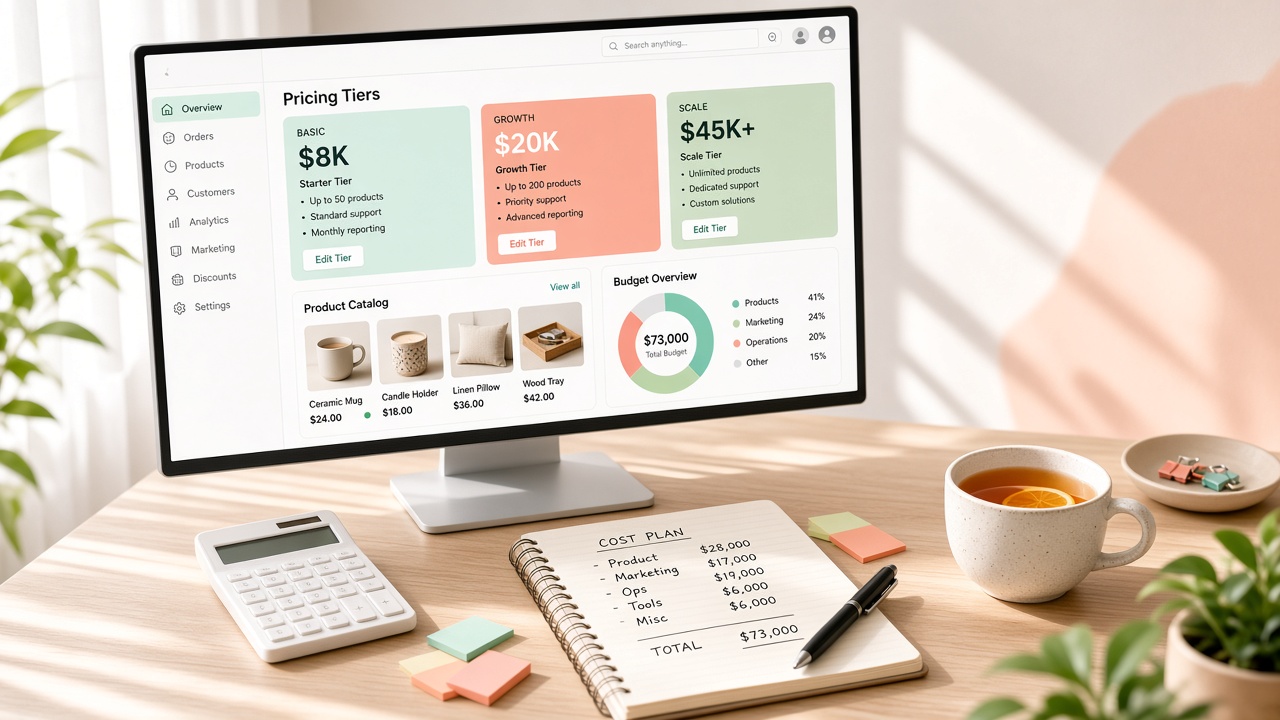
There's no single number that fits every business. Overall ecommerce app development cost typically ranges from $8,000 for a basic startup build to $100,000 or more for a fully custom, enterprise-grade platform. Here's what actually drives that number.
1. Discovery and Market Research
Every project starts with understanding your target audience, competitor landscape, and business goals. This stage also maps out regulatory or industry-specific requirements.
Skipping proper research often leads to costly pivots later, once real user needs or market gaps surface unexpectedly during actual development work.
2. UI/UX Design
Design shapes how customers experience your store daily, covering wireframes, prototypes, and final visual design. Clean, intuitive design reduces bounce rates and builds trust faster.
Businesses investing more here typically see stronger conversion rates, since cluttered or confusing layouts push shoppers toward competitor platforms almost immediately.
3. Frontend Development
This stage builds the customer-facing storefront, including product pages, navigation, and the shopping cart experience.
Since most traffic comes from mobile devices, developers focus heavily on responsiveness and load speed here, since slow-loading pages directly correlate with higher bounce rates and lost sales opportunities.
4. Backend Development and Database Setup
Behind the scenes, developers build systems handling inventory, orders, and customer accounts.
This stage often represents the largest share of overall ecommerce website development cost, since a poorly structured backend causes slowdowns or errors as the product catalog and order volume grow over time.
5. Payment Gateway Integration
Secure, reliable payment processing gets integrated here, supporting multiple methods and currencies if the business sells internationally.
This stage requires thorough testing, since payment failures directly cost sales and damage customer trust instantly, making it one of the most critical technical components of the platform.
6. Third-Party Integrations
Ecommerce platforms rarely operate alone, connecting to shipping providers, email marketing tools, and analytics platforms.
Getting these integrations right the first time prevents operational headaches later, since manual workarounds for broken integrations waste time and introduce errors into daily business operations across the board.
7. Security and Compliance
Protecting customer data requires encryption, secure payment gateways, and compliance with standards like PCI DSS.
This stage isn't optional, since data breaches damage trust instantly and can trigger serious legal consequences, especially for platforms handling large volumes of sensitive payment and personal information.
8. Quality Assurance and Testing
Before launch, the platform undergoes functional, security, and load testing to catch bugs and vulnerabilities.
Teams simulate high-traffic scenarios like flash sales, ensuring the platform holds up under pressure rather than crashing during the exact moments when revenue potential is highest.
9. Marketplace-Specific Features
Businesses building multi-vendor platforms face additional complexity, and marketplace development cost typically runs higher due to vendor management, commission tracking, and multi-seller order processing requirements that standard single-vendor stores simply don't need to account for.
10. Deployment and Post-Launch Support
Launch involves final deployment, monitoring setup, and the first round of updates based on user feedback.
Factoring in ongoing support from the start gives you a realistic, complete picture of total cost, not just the launch-day number businesses often mistakenly treat as final.
| Platform Tier | What's Included | Estimated Cost |
|---|---|---|
| Startup Ecommerce Software | Custom commerce software, core storefront features, single payment gateway, basic inventory management, standard checkout | $8,000 – $20,000 |
| Business Ecommerce Software (Most Popular) | Advanced commerce functionality, custom UI/UX design, multiple payment gateways, personalized recommendations, multi-channel selling | $20,000 – $45,000 |
| Enterprise Ecommerce Software | Large-scale commerce architecture, headless or fully custom build, multi-region and multi-currency support, advanced automation, ERP/CRM integrations | $45,000 – $100,000+ |
Key Factors That Affect the Final Cost
Two businesses building seemingly similar platforms can end up with very different price tags. Several variables push the cost up or down significantly. Here are eight factors that shape your final ecommerce software budget the most.
1. Platform Complexity and Feature Set
The more features you add, the higher your development cost climbs. A basic storefront with standard checkout costs far less than a platform with live chat, personalization, or loyalty programs.
Businesses need to decide upfront which features are essential versus nice-to-have additions for later phases.
2. Custom Build vs. Off-the-Shelf Solutions
Using pre-built platforms like Shopify costs less upfront but limits flexibility down the road.
Fully custom builds cost more initially but give businesses complete control over features, branding, and scalability. Companies planning long-term growth often find custom ecommerce website development worth the higher initial investment eventually.
3. Team Expertise and Development Approach
Working with experienced ecommerce software development services typically costs more per hour but reduces the risk of bugs, security gaps, and missed deadlines.
Cheaper, less experienced teams often lead to costly rework later, making the higher upfront investment worthwhile for complex, business-critical platforms.
4. Number of Platforms Supported
Building for web, iOS, and Android simultaneously costs significantly more than launching on a single platform first.
Cross-platform frameworks reduce this cost somewhat, but supporting multiple platforms still requires additional testing and optimization, since performance issues on one platform can damage your reputation just as easily.
5. Third-Party Integrations Required
Payment gateways, shipping APIs, marketing tools, and analytics platforms all add licensing fees and integration time.
Each additional third-party service increases both development cost and ongoing operational expenses, since most charge per-transaction or subscription fees that scale with your platform's usage and growing customer base.
6. Design Complexity and Customization
Simple, template-based designs cost less than fully custom interfaces built from scratch.
Businesses aiming for a distinctive brand identity typically invest more in UI/UX design, since generic-looking platforms struggle to stand out in a market already dominated by established, recognizable competitors and brands.
7. Scalability and Infrastructure Needs
Platforms built to handle high traffic volumes and rapid growth require more robust cloud infrastructure and architecture planning upfront.
This costs more initially but prevents expensive rebuilds later, once user numbers or transaction volume exceed what a smaller, less scalable setup could reasonably support.
8. Geographic Scope and Compliance Requirements
Launching in multiple countries means navigating different regulations, payment methods, and tax requirements.
This complexity adds both development time and legal consultation costs. Platforms targeting a single market launch faster and cheaper than those trying to support multiple regions with varying compliance rules from day one.
Choosing the Right Development Partner for Your Ecommerce Software
The team you hire shapes everything from launch timeline to long-term platform performance. Beyond technical skill, the right partner understands your budget, business goals, and growth plans. Here's what to evaluate before signing a contract.
1. Proven Experience with Similar Projects
Not every development agency understands the unique demands of ecommerce, real-time inventory, secure payments, and scalable architecture.
Look for a team with case studies and live examples of similar platforms they've built previously. Experience here reduces the risk of costly mistakes during development and speeds up the overall timeline.
2. Technical Expertise Across the Full Stack
Your partner needs skills spanning frontend design, backend architecture, payment integrations, and third-party tools. A team weak in any single area creates bottlenecks later.
Confirm their experience with the specific technologies and platforms you plan to use before committing to a long-term development partnership.
3. Scalability and Enterprise-Grade Experience
If you're planning significant growth, working with an enterprise ecommerce development company matters more than choosing the cheapest option available.
These teams understand how to architect systems that handle high traffic and complex integrations without requiring a complete rebuild once your business scales significantly.
4. Transparent Pricing and Project Scope
Vague quotes lead to budget surprises later. A trustworthy partner breaks down costs clearly by development stage, whether it's design, backend work, or integrations, so you know exactly what you're paying for before committing.
Clear scope documents also prevent disputes over what counts as additional work.
5. Strong Security and Compliance Knowledge
Ecommerce platforms handle sensitive data, including payment details and personal information. Confirm the team understands data protection regulations and industry security standards relevant to your target market.
Teams without this expertise risk building vulnerabilities that could expose customer data or violate compliance requirements later.
6. Clear Communication and Project Management
Delays often come from poor communication, not poor coding. Choose a team that provides regular updates, clear milestones, and honest timelines from the very first conversation.
Agile workflows with visible sprint progress let you catch issues early, rather than discovering problems only after months of silent development work.
7. Post-Launch Support and Maintenance
Launch day isn't the finish line. Ask what ongoing support looks like, including response times for bugs, security patches, and feature updates.
A partner who disappears after delivery leaves you scrambling when something breaks, so clarify support terms and pricing before signing any development contract upfront.
8. Experience with Emerging Technologies
Platforms incorporating AI ecommerce development services, like personalized recommendations or chatbot support, need a team comfortable working with newer technologies, not just standard ecommerce features.
Partners with this expertise help future-proof your platform against evolving customer expectations and competitive pressure in the market.
Final Thoughts
Ecommerce software development cost isn't a single number, it's the sum of dozens of decisions, features, platform type, design complexity, and the team you choose to build with.
Understanding what actually drives that cost gives you real control over your budget instead of being surprised by expenses halfway through the project.
Whether you're launching a lean startup store or a full enterprise-grade platform, the breakdown covered here gives you a realistic starting point for planning.
Businesses that budget thoughtfully from the beginning, accounting for hidden costs and choosing the right development partner, are the ones that build platforms capable of scaling smoothly instead of requiring expensive rebuilds down the road.
Frequently Asked Questions
1. How much does it cost to build ecommerce software?
Costs typically range from $8,000 for a basic startup platform to $100,000 or more for a fully custom, enterprise-grade build with advanced integrations and headless architecture.
2. What's the cheapest way to launch ecommerce software?
Starting with a pre-built platform like Shopify keeps upfront costs lowest. You can add custom features and migrate to a more robust solution as revenue grows.
3. How long does it take to build ecommerce software?
Most platforms take three to eight months to build, depending on complexity, chosen platform type, and whether you're building custom or using existing solutions.
4. Do I need a custom build, or is a SaaS platform enough?
SaaS platforms suit businesses wanting speed and lower upfront cost. Custom builds cost more but offer full control over features, branding, and long-term scalability.
5. What's the biggest hidden cost businesses overlook?
Third-party API fees, ongoing hosting, and customer acquisition costs surprise most businesses. These expenses scale with usage and growth, unlike one-time development costs.
6. How much should I budget for ongoing maintenance?
Plan for 15-20% of your original development cost annually, covering hosting, security updates, bug fixes, and feature improvements based on real customer behavior and feedback.
7. Should I build a marketplace or a single-vendor store?
Marketplaces cost more due to vendor management and commission tracking complexity. Single-vendor stores suit businesses selling their own products without managing multiple sellers.
8. What payment methods should my platform support?
At minimum, support major credit cards, digital wallets like Apple Pay and Google Pay, and at least one buy-now-pay-later option to match modern customer preferences.
9. Can I add AI features later instead of at launch?
Yes. Many businesses launch with core storefront features first, then add AI-powered recommendations or chatbots once they have enough customer data to make them effective.
10. How do I choose between an in-house team and an agency?
It depends on internal expertise and project complexity. Simple platforms often work in-house, while complex, custom builds benefit from experienced development partners who reduce risk.