Key Takeaways
- eCommerce app development costs range from $8,000 to $70,000+, depending on complexity, platform, and team structure.
- Core features like secure checkout, smart search, and simple onboarding directly impact conversion rates.
- Cross-platform frameworks like Flutter and React Native cut costs while covering both iOS and Android.
- A structured development process from research to post-launch support prevents costly rework and delays.
- Budget for ongoing maintenance, since it typically runs 15 to 20 percent of your initial development cost each year.
Building an eCommerce app in 2026 isn't just about adding a shopping cart to a website anymore.
Shoppers expect fast load times, quick checkout, personalized recommendations, and an experience that feels effortless on a small screen.
If you are a business owner exploring app development, you are probably juggling questions about features, budget, and which tech stack actually makes sense for your goals.
This guide walks you through everything: the features your app cannot skip, the technology stack top developers rely on, the full development process, and a realistic cost breakdown at the end. No fluff, no jargon overload, just what you need to make smart decisions.
Must Have Features of a Successful eCommerce App
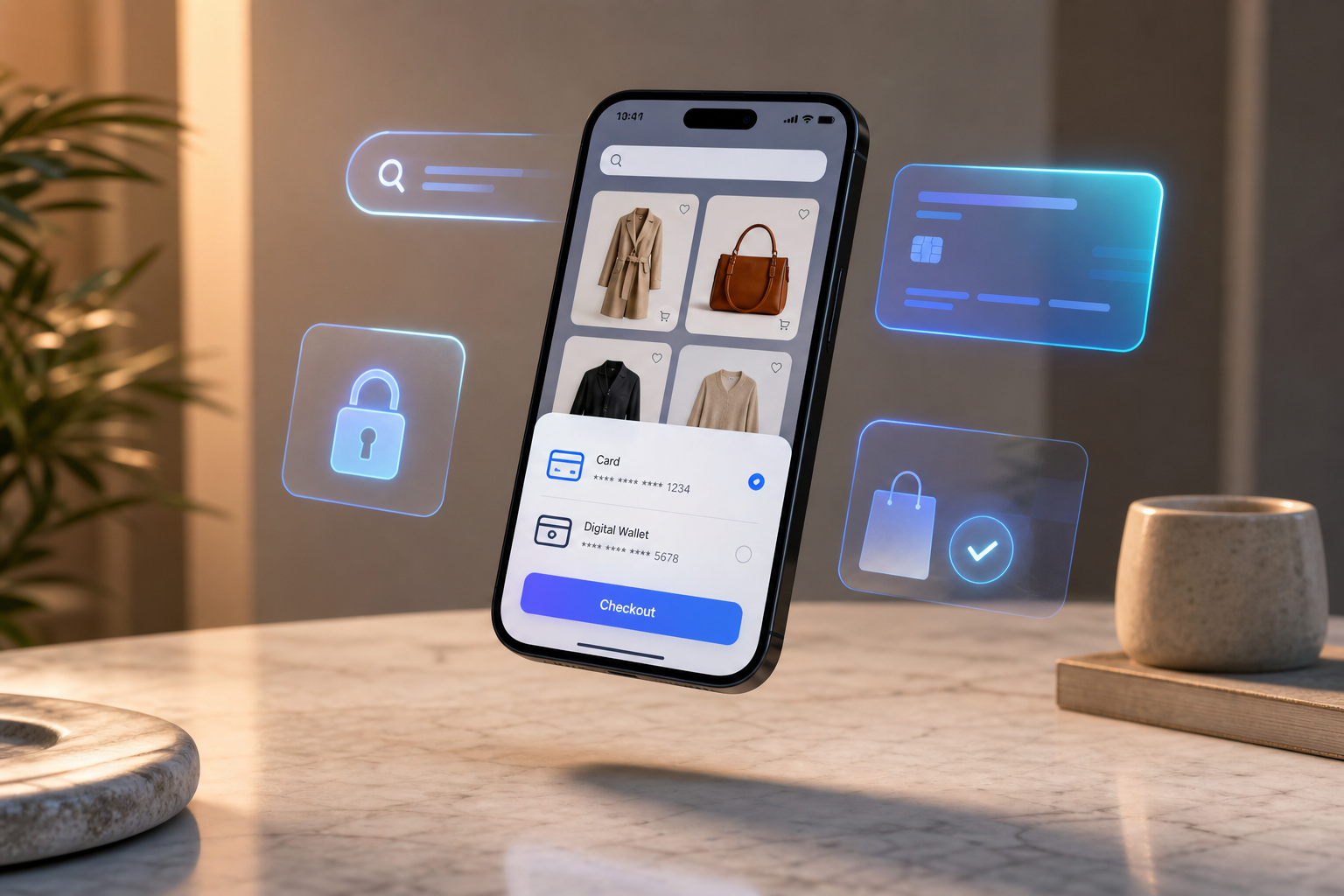
Great eCommerce apps are not built on guesswork. Certain features separate apps that convert browsers into buyers from apps that get deleted after one use. Here are the three that matter most at launch.
1. User Onboarding & Login Options
First impressions matter. A smooth onboarding flow with social login, guest checkout, and OTP verification cuts drop off rates fast. Skip lengthy forms. Let users browse first and create accounts only when they are ready to buy.
2. Product Search & Filtering
Shoppers will not dig through endless pages. Smart search with autocomplete, voice search, and filters for size, price, and color helps users find products in seconds. Good filtering directly boosts conversion rates and order value.
3. Secure Checkout & Payment Gateway
Cart abandonment often happens at checkout. Multiple payment options such as cards, wallets, and buy now pay later, paired with SSL encryption and PCI compliance, build trust. A one page checkout with saved addresses speeds things up.
Best Technology Stack for eCommerce App Development
The right tech stack determines your app's speed, scalability, and security. Here is what experienced development teams typically use to build eCommerce apps that perform well under real-world traffic and transaction loads.
1. Frontend Technologies
React Native and Flutter dominate cross-platform development, letting teams build for iOS and Android from one codebase. For native apps, Swift handles iOS while Kotlin powers Android, delivering smoother performance and platform-specific features.
2. Backend Technologies
Node.js, Python with Django, and Ruby on Rails are popular backend choices for eCommerce apps. They handle high traffic, process orders quickly, and integrate easily with inventory systems, payment gateways, and third-party APIs.
3. Database Options
MySQL and PostgreSQL suit structured product and order data. MongoDB works well for flexible, high-volume catalogs. Redis often handles caching, speeding up product searches and reducing server load during traffic spikes.
4. Cloud & Hosting Solutions
AWS, Google Cloud, and Microsoft Azure power most modern eCommerce apps. They offer auto-scaling during sales events, reliable uptime, and built in security features that protect customer data and payment information.
5. Payment Gateway Integrations
Stripe, PayPal, and Square are go to choices for US based apps. They support multiple payment methods, handle currency conversion, and meet PCI compliance standards, reducing the development burden around payment security.
6. Third Party Tools & APIs
Shipping APIs like ShipStation, analytics tools like Google Analytics, and marketing platforms like Klaviyo extend app functionality. These integrations save development time and add proven features without building everything from scratch.
Step-by-Step eCommerce App Development Process
Every successful eCommerce app follows a structured process, no matter if you build in house or hire an eCommerce app development company. Skipping steps leads to costly rework later. Here is the full journey from idea to launch.
1. Market Research & Planning
Before writing code, teams study competitors, define target users, and map out core features. This phase sets the app's scope, budget, and timeline, preventing expensive changes once development is already underway.
2. Choosing the Right Development Partner
Picking between an agency, freelancer, or in house team shapes your entire project. Look at portfolios, client reviews, and communication style before signing anything. The right partner saves time and prevents costly mistakes later.
3. Wireframing & Prototyping
Low fidelity wireframes map out screen layouts and user flow before any design work begins. Clickable prototypes let stakeholders test navigation early, catching structural issues before developers write a single line of code.
4. UI/UX Design
Designers create polished screens focused on intuitive navigation and fast checkout. User testing at this stage catches usability issues early, saving development time and ensuring the final app feels natural and enjoyable to use.
5. Development & Coding
Developers build the frontend, backend, and database in parallel sprints. Regular check ins keep the project aligned with the original plan, while agile workflows allow teams to adjust priorities as new needs emerge.
6. Third Party Integrations
Payment gateways, shipping APIs, and analytics tools get connected during this phase. Careful testing of each integration prevents checkout failures, shipping errors, and broken tracking once real customers start placing orders.
7. Testing & Quality Assurance
QA teams test functionality, security, and performance across devices. Load testing simulates high traffic to catch crashes before launch. Bug fixes at this stage prevent negative reviews and costly patches after release.
8. App Store Optimization
Store listings need optimized titles, keywords, screenshots, and descriptions to attract downloads. Strong ASO increases visibility in search results, helping new apps compete against established players without spending heavily on ads.
9. Deployment & Launch
The app goes through App Store and Google Play review, which can take several days. Teams prepare marketing materials and support channels in advance so the launch runs smoothly from day one.
10. Post Launch Support & Maintenance
Launch is not the finish line. Teams monitor crash reports, release regular updates, and add features based on user feedback. Ongoing support keeps the app compatible with new OS versions and security standards.
eCommerce App Development Cost Breakdown
Budget is usually the first question business owners ask about eCommerce app development cost. Complexity, platform, and eCommerce website development needs all affect pricing. Based on an overall range of $8,000 to $70,000+, here is the full cost breakdown by feature and build type.
| Feature / Build Type | Cost Range | Typical Timeline |
|---|---|---|
| Basic UI/UX Design | $500 to $600 | 1 to 2 weeks |
| Login & User Onboarding | $550 to $700 | 1 to 2 weeks |
| Product Catalog Setup | $800 to $900 | 2 to 3 weeks |
| Search & Filter Functionality | $850 to $1,100 | 2 to 3 weeks |
| Payment Gateway Integration | $1,000 to $1,400 | 2 weeks |
| Shopping Cart & Checkout | $1,200 to $1,700 | 2 to 3 weeks |
| Admin Panel / Dashboard | $1,500 to $2,300 | 3 to 4 weeks |
| Testing & QA | $1,000 to $1,500 | 2 weeks |
| eCommerce Website Development (Add-on) | $2,000 to $6,000 | 3 to 5 weeks |
| Complete eCommerce App (Full Build) | $8,000 to $70,000+ | 6 weeks to 8 months |
Conclusion
Building an eCommerce app is a real investment, but it does not have to feel overwhelming.
Start by nailing down the features your customers actually need, then match your budget, somewhere between $8,000 and $70,000+, to the complexity that fits your business goals.
Choose a tech stack that scales as you grow, and follow a proven development process instead of rushing to launch.
The businesses that succeed with their apps are not necessarily the ones who spent the most money.
They are the ones who planned carefully, tested thoroughly, and kept improving after launch.
From a lean MVP to a full-featured platform, the right development partner makes all the difference. Take the time to plan it right, and your app will pay for itself.
Frequently Asked Questions
1. How much does it cost to build an eCommerce app in 2026?
Costs typically range from $8,000 for a basic app to $70,000+ for advanced, enterprise level apps with custom features.
2. How long does it take to develop an eCommerce app?
Most apps take 8 to 20 weeks, depending on complexity, from planning through launch.
3. Should I build for iOS, Android, or both?
Cross platform frameworks like Flutter or React Native let you launch on both platforms without doubling your budget.
4. What is the difference between a native app and a cross platform app?
Native apps are built specifically for one OS and offer top performance. Cross platform apps share code across iOS and Android, cutting costs and development time.
5. Do I need a custom backend, or can I use a ready made platform?
Ready made platforms like Shopify work for simple stores. Custom backends suit businesses needing unique features, complex integrations, or high traffic volumes.
6. How much does app maintenance cost after launch?
Plan for 15 to 20 percent of your initial development cost annually to cover updates, hosting, and bug fixes.
7. What payment gateways work best for a US based eCommerce app?
Stripe, PayPal, and Square are the most widely used, offering strong security and support for multiple payment methods.
8. Can I reduce development costs without sacrificing quality?
Yes. Start with an MVP, use prebuilt modules for common features, and add advanced functionality after validating demand.
9. What features are essential for a successful eCommerce app?
Secure checkout, smart search and filtering, and a smooth onboarding process are essential for keeping users engaged.
10. Should I hire a freelancer, agency, or in house team?
Freelancers suit small budgets, agencies offer accountability and support, and in house teams work best for long term, evolving products.